Collector guide
SGC Card Grading: Scale, Standards, and When It Pays
Learn how SGC card grading works: the 1-10 scale, centering standards, tuxedo slabs, resale trade-offs, and a checklist for deciding what to submit.
By Matteo G.
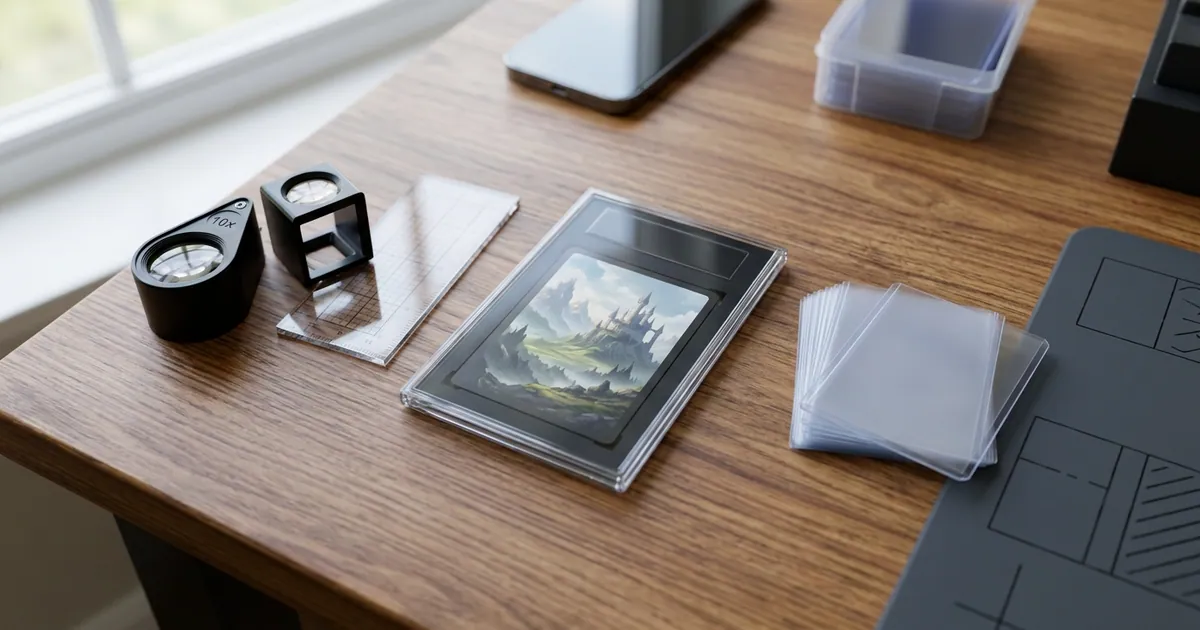
SGC card grading is a third-party service that authenticates your card, assigns a grade on a 1–10 scale with half points, and seals it in a slab with a black inner insert that collectors call the tuxedo. SGC has a long-standing reputation with vintage collectors and is often cheaper than PSA. Modern SGC slabs, however, usually sell for less than PSA equivalents, so whether SGC is the right call depends on the card, what you plan to do with it, and how close it really is to a top grade.
Key takeaways
- SGC grades on a 1–10 scale with half grades. It has historically offered a Pristine 10 tier above Gem Mint 10, so confirm the current tiers on SGC’s official site.
- Centering carries a lot of weight. SGC’s published scale has put Gem Mint 10 at roughly 55/45 front centering, and the allowance loosens as grades drop.
- SGC is a strong pick for vintage, pre-war, and odd-size cards, and for collectors who like the black-insert look.
- For high-value modern cards you plan to sell, the PSA resale premium often outweighs SGC’s lower fees.
- Check centering, corners, edges, and surface before you pay any fee. An AI pre-grade is an estimate, not an SGC grade.
What SGC is and what it grades
SGC (Sportscard Guaranty) launched in 1998 and built its name on vintage baseball and football cards. Today it grades modern sports cards, trading card games like Pokémon and Magic: The Gathering, and non-sport cards, and it also offers autograph authentication. In early 2024, SGC was acquired by Collectors, the parent company of PSA. SGC still operates under its own brand, slab, and label, but ownership changes can bring new pricing, turnaround times, and submission rules. Read SGC’s current submission page before you ship anything.
What sets SGC apart in practice:
- The slab. The black insert frames the card and makes its borders stand out. That looks great on clean vintage cardboard. It also makes off-center borders and white edge chipping easier to see, so it flatters some cards more than others.
- Vintage and odd sizes. SGC has long handled tobacco cards, pre-war issues, and non-standard formats. If you collect T206-era cards or 1950s issues, vintage buyers widely accept SGC slabs.
- Cost. SGC’s entry-level pricing has historically been lower than PSA’s. Tiers and prices change often, so treat any number you see online, including from friends and forums, as possibly out of date.
How the SGC grading scale works
Older SGC slabs show a 100-point number next to a 10-point grade (for example, 96 paired with Mint 9). Current labels use the 10-point scale with half grades. Below is how SGC’s published scale has described the top grades, along with approximate front-centering allowances. Treat this as a guide, not gospel. SGC’s grading standards page is the source of truth.
| Grade | Label | Approx. front centering (as published) |
|---|---|---|
| 10 | Pristine | 50/50 |
| 10 | Gem Mint | 55/45 or better |
| 9.5 | Mint+ | About 55/45 |
| 9 | Mint | About 60/40 |
| 8–8.5 | NM-MT / NM-MT+ | About 60/40 to 65/35 |
| 7–7.5 | NM / NM+ | About 70/30 |
| 6–6.5 | EX-NM / EX-NM+ | About 80/20 |
| 5–5.5 | EX / EX+ | About 85/15 |
| 1–4 | Poor to VG-EX | Progressively looser |
SGC’s published descriptions focus mainly on front centering. Back centering is generally judged more leniently, but check the current wording rather than assuming. SGC also uses Authentic designations for cards that are genuine but can’t receive a numeric grade, including cards it judges to be altered.
It helps to know how small these margins are. Say the left and right borders on a standard 2.5-inch-wide card add up to 4 mm. A 55/45 split means 2.2 mm on one side and 1.8 mm on the other. That’s a 0.4 mm difference, which your eye can easily miss. Measure it instead of eyeballing it. Our card centering tool and the guide on how to measure card centering walk through the math.
Centering is also only one factor. A card with perfect 50/50 centering and one soft corner is not a 10.
What SGC graders look at
SGC’s published Gem Mint description, paraphrased, calls for sharp focus, four sharp corners, no stains, no breaks in surface gloss, no print or refractor lines, and no visible wear. A slight print spot visible only under close scrutiny may be allowed. Here’s how to check each of those yourself:
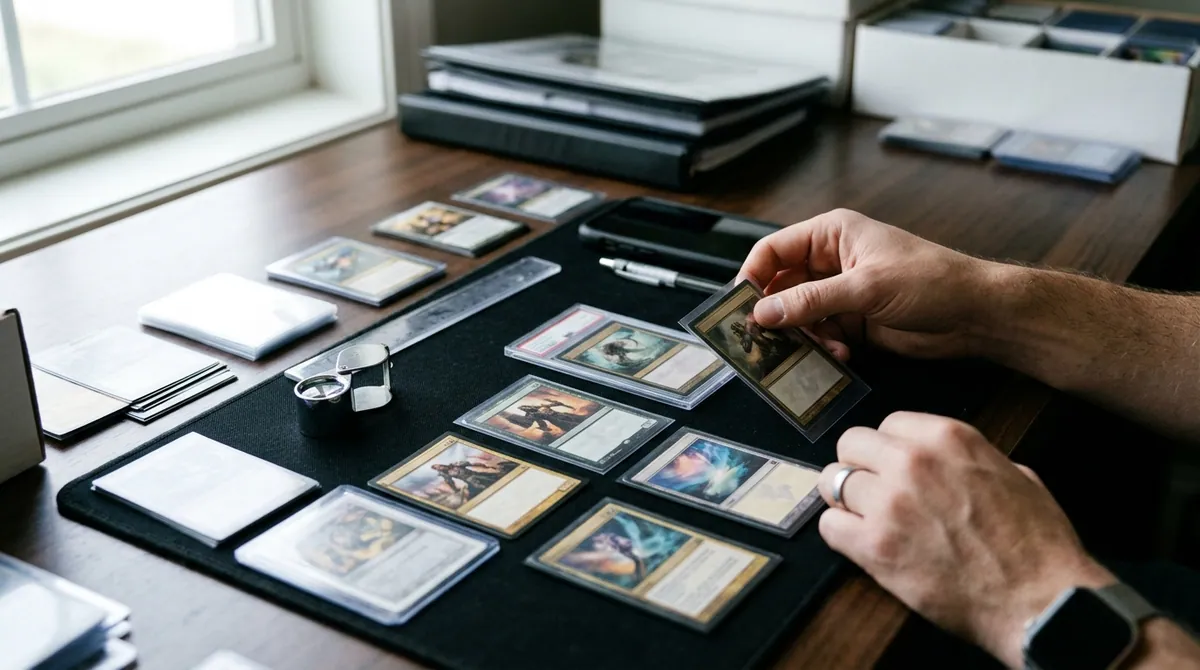
- Corners. Use a 10x loupe and look straight down at each corner, then at an angle. Any rounding, fraying, or a white dot at the tip usually takes a card out of 10 territory. Ding marks on the back corner count too.
- Edges. Hold the card against a dark surface and tilt it. Whitening, chipping on colored borders, and rough or wavy factory cuts all show up best this way. The black SGC insert will make edge flaws more visible once the card is slabbed, so be strict here.
- Surface. Put a single LED light at a low angle, roughly 15–30 degrees off the table, and rotate the card a full 360 degrees. Hairline scratches, print lines, roller marks, dimples, and fingerprints appear and disappear as the light moves across them. Chrome, refractor, and holo cards need the most attention.
- Focus and print. Check that the image and text are sharp, with no ghosting or misregistered colors. Print defects from the factory can still cost you grade points.
- Gloss. Look for dull patches or breaks in the surface sheen, especially on glossy modern stock and on vintage cards that may have been stored in contact with other cards.
SGC vs PSA, BGS, and CGC: where it fits
The big trade-off is resale value versus cost and aesthetics. PSA slabs usually carry the strongest resale premium on modern cards. BGS is known for subgrades. CGC has a strong following in Pokémon and other TCGs. SGC sits in the middle, with a vintage reputation, a distinctive look, and often lower fees. For a deeper comparison of the other three, see PSA vs BGS vs CGC.
Here’s a practical way to decide:
| Your situation | Reasonable pick |
|---|---|
| Vintage or pre-war card, keeping or selling to vintage buyers | SGC is a strong option |
| High-value modern card you plan to flip | Usually PSA, for the resale premium |
| You want individual subgrades on the label | BGS |
| Modern Pokémon or TCG card for your own collection | SGC or CGC, based on price and the look you prefer |
| Budget submission of mid-value personal collection cards | SGC is often cost-effective |
These are tendencies, not rules. Market preferences shift, so check recent sold prices for your exact card at your expected grade across companies.
When SGC makes sense, and when it doesn’t
SGC makes sense when:
- You’re slabbing vintage cards for protection, authentication, or sale to vintage collectors.
- The card is for your personal collection and you like the black insert.
- You want authentication on an older or odd-size card where a numeric grade matters less than proof it’s real.
- The math still works with SGC-level resale prices.
Skip SGC, or skip grading entirely, when:
- The fee is bigger than the premium. If a raw card sells for $20, a realistic SGC 9 sells for $35, and your all-in cost is $30 (grading, shipping both ways, insurance, and selling fees), you lose money. Run this math with real sold prices before every submission.
- It’s a modern chase card you plan to sell, and it might gem. A PSA 10 often sells well above an SGC 10. Choosing the cheaper grader can cost you more in resale than you saved on fees.
- The modern card has visible damage. A creased or heavily whitened modern base card rarely justifies any grading fee.
- You need subgrades to prove a card was close to perfect. SGC labels don’t show them the way BGS does.
Pre-submission checklist for SGC
Do this with the card in front of you before you pay anything:
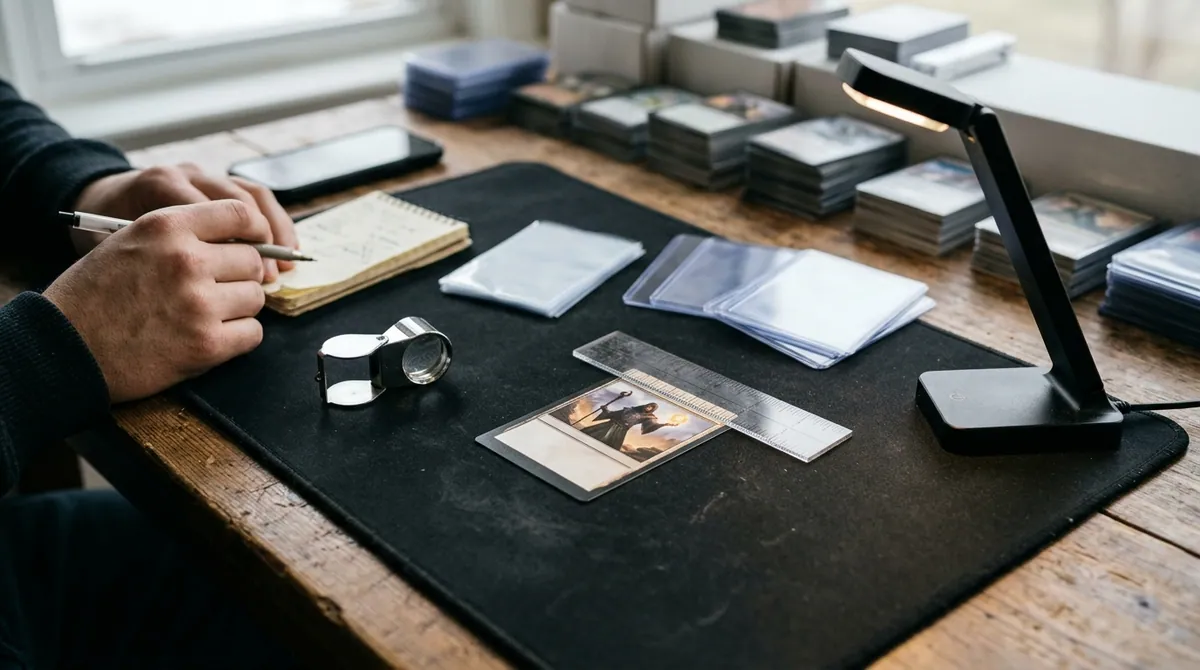
- Price it first. Look up recent sold listings for the raw card and for SGC slabs at 8, 9, and 10. Also check PSA sold prices so you know what you’d be giving up.
- Set up a clean workspace. Wash and dry your hands, and work on a microfiber cloth or mat. Handle the card by its edges.
- Measure front centering. Measure left vs right and top vs bottom borders in millimeters and convert to a ratio. If either direction is worse than about 55/45, a 10 is unlikely.
- Measure back centering. Note it, even though SGC’s standards are typically more forgiving on the back.
- Inspect all four corners front and back under a 10x loupe.
- Inspect all four edges against a dark background with the card tilted.
- Rake the surface with a single low-angle light while rotating the card 360 degrees. Check for scratches, print lines, dents, and fingerprints.
- Check for alterations. A standard card measures 2.5 by 3.5 inches. Unusually sharp corners on a worn vintage card, or a card that measures short, can point to trimming. Altered cards come back as Authentic Altered rather than a numeric grade.
- Assign yourself an honest grade range, such as 8–9. If the top of your range doesn’t make the price math work, keep the card raw.
- Package it the way SGC currently specifies. Penny sleeves inside semi-rigid holders are the common standard across graders, but follow SGC’s current instructions.
- Declare value accurately on your submission. Service tier and insurance depend on it.
For general packing and handling tips, our sports card grading guide covers the basics that apply across companies.
How the SGC submission process works
The process is similar to other graders. You create an account on SGC’s website, pick a service level based on declared value and turnaround, enter your cards, and print a packing slip. Then you ship the cards insured and trackable and wait for them to come back slabbed. Some card shows and local shops offer group submissions or drop-off. Service levels, minimums, and turnaround estimates change, so confirm them on SGC’s site the day you submit, not from a months-old forum post.
Using Card Grading AI before you submit
We built Card Grading AI to handle the triage step. You photograph the front and back of a card, and the app measures centering, flags possible corner, edge, and surface issues, and gives you an estimated grade range. That makes it easier to sort a stack into likely submissions, maybes, and keep-raw cards before you spend money. You can see the scanning steps on how it works and the details on AI card grading.
To be clear about limits: a Card Grading AI result is a pre-grade estimate, not an SGC grade, an appraisal, or a guarantee. SGC graders handle the physical card under magnification and controlled light, and photos can miss fine scratches or subtle print defects. Use the estimate alongside the checklist above, not instead of it.
If you have a pile of cards and aren’t sure which ones are worth SGC’s fees, scan them with Card Grading AI first. Check pricing to see which plan fits how many cards you grade.
FAQ
Is SGC a good grading company?
Yes. SGC is one of the long-established third-party graders and is especially well regarded for vintage and pre-war cards. For modern cards you plan to sell, SGC slabs often sell for less than PSA slabs at the same grade, so the right choice depends on the card and your goal.
What is the difference between SGC Pristine 10 and Gem Mint 10?
SGC has historically used Pristine 10 as a tier above Gem Mint 10. In SGC's published descriptions, Pristine calls for 50/50 centering and a virtually flawless card, while Gem Mint has allowed roughly 55/45 centering. Confirm the current tiers on SGC's official grading scale page because labels and standards can change.
Does SGC grade Pokemon and other TCG cards?
Yes. SGC grades trading card games such as Pokemon and Magic: The Gathering along with sports and non-sport cards. Check SGC's current submission page for accepted card types, sizes, and service levels before you ship.
Are SGC graded cards worth less than PSA?
For many modern cards, SGC slabs sell below PSA slabs at the same numeric grade. For vintage cards the gap is often smaller, and some collectors prefer SGC's black-insert look. Always compare recent sold prices for your specific card at the specific grade.
Can Card Grading AI tell me my SGC grade?
No. Card Grading AI gives an AI-based estimate, or pre-grade, from your photos. It can flag centering, corner, edge, and surface issues so you can decide whether a card is worth submitting, but only SGC can assign an official SGC grade.
Keep reading
Related guides
Ready to inspect your next card?
Scan your cards instantly with Card Grading AI
Capture a clear front-and-back photo, review an AI-assisted condition estimate, and keep standout cards organized in your collection.