Collector guide
Best Pokémon Card Scanner App in 2026
Compare what a great Pokémon card scanner should do in 2026: AI condition estimates, centering checks, catalog matching, portfolio tracking, and clear photo guidance.
By Matteo G.
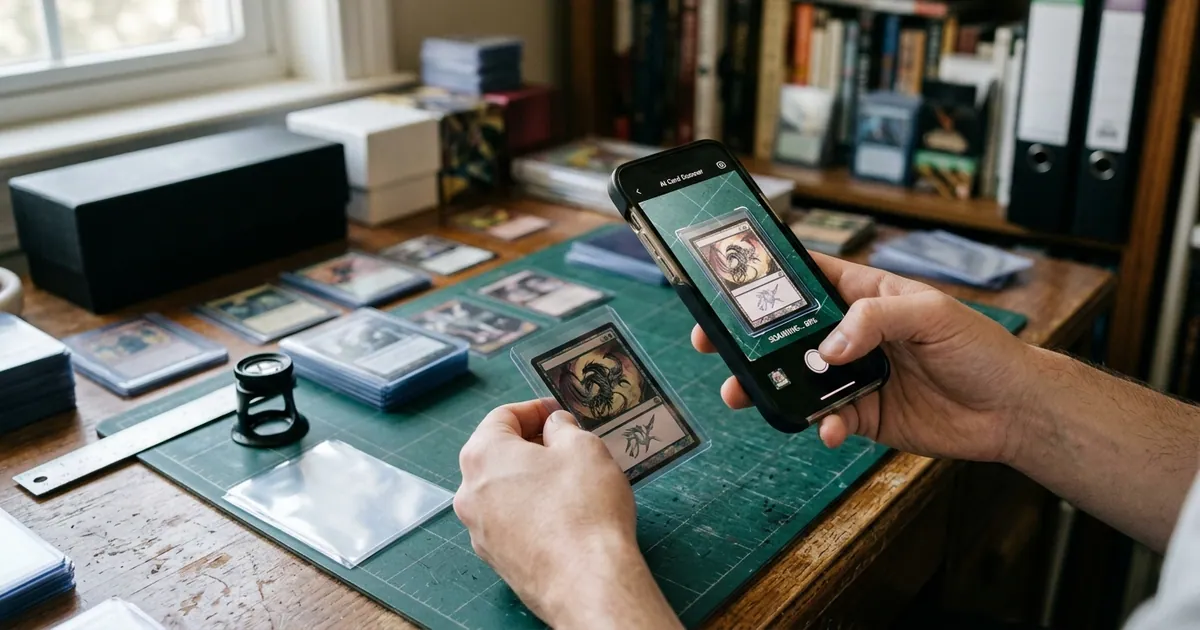
Looking for the best Pokémon card scanner in 2026 usually means you want more than a camera shutter button. Collectors want help answering practical questions: What is this card? What condition does it look like? Is centering close? Is it worth tracking, selling, or submitting?
This guide breaks down what actually matters in a scanner app, where AI helps, and how Card Grading AI approaches the job.
What “Pokémon card scanner” means in 2026
The phrase covers several overlapping tools:
- Identification scanners that match a photo to a catalog entry
- Condition scanners that estimate wear from images
- Portfolio scanners that add cards into a collection with market context
- Hybrid apps that combine identification, pre-grading, and tracking
For serious collectors, the hybrid approach is usually the most useful. Identification alone does not tell you whether a copy is gem-worthy. Condition alone is less useful if you cannot organize the cards you care about.
Evaluation criteria that matter more than buzzwords
1. Photo guidance and consistency
A scanner is only as good as the images it receives. The best apps make good capture habits obvious: full card in frame, even light, both sides, no cropped corners.
2. Condition breakdown, not vanity scores
A single number without context encourages blind trust. Better tools surface centering, corners, edges, and surface signals so you can verify the result yourself. See AI card grading for the category basics.
3. Honest limits
Any credible Pokémon scanner should state that AI estimates are not official grades. If an app markets itself like a pocket PSA, treat that as a warning sign.
4. Collection workflow
Scanning once is interesting. Scanning into a collection you can revisit is useful. Portfolio and catalog tools turn one-off curiosity into ongoing collecting infrastructure.
5. Speed across many cards
Most collectors are not grading one trophy card. They are sorting a binder, a lot purchase, or a show haul. Fast capture and clear next actions matter.
Where Card Grading AI stands
Card Grading AI is built around AI-assisted pre-grading and collector workflows:
- Image-based condition estimates for trading cards, including Pokémon
- Structured review of visible condition areas
- Centering support for collectors who care about borders
- Catalog and collection tools for organizing cards over time
- Web plus mobile access so scanning is not locked to one device
If your main goal is Pokémon-specific pre-grading context, read the Pokémon card grading page next. If you want plan details before trying Pro features, check Pricing.
Who should use an AI Pokémon scanner
Great fit
- Collectors screening raw cards before submission
- Buyers comparing multiple copies of the same hit
- Portfolio builders who want condition notes with collection records
- Anyone learning to spot centering and corner issues more consistently
Not a fit
- Anyone expecting a certified grade from a photo
- Authentication-only workflows that require physical inspection
- Sellers who need an official label for listing premiums
How to choose between scanner apps
Ask these questions before committing:
- Does it analyze both front and back?
- Does it explain condition factors, or only spit out a score?
- Can you save cards into a collection?
- Are the marketing claims careful about “estimate” vs “certified grade”?
- Can you use it on the device you actually collect with?
For many collectors, the winning app is the one they will use on every binder pass, not the one with the flashiest homepage claim.
Practical scanning workflow
- Pick a clean surface and consistent light.
- Scan front and back.
- Read the breakdown.
- Confirm defects on the physical card.
- Save noteworthy cards to your collection.
- Only shortlist true standouts for professional grading.
That loop is where a scanner creates leverage: fewer wasted submissions, cleaner inventory notes, and faster decisions.
Bottom line
The best Pokémon card scanner in 2026 is the one that helps you inspect, organize, and decide — without pretending to be a grading company. Card Grading AI focuses on that pre-grade and collection workflow so you can move from photo to decision quickly.
Try it on a card whose condition you already know. If the breakdown matches what your eyes see, you have a tool worth keeping in the binder routine.
FAQ
What should the best Pokémon card scanner do?
It should analyze clear card photos for condition signals, help with centering, support collection tracking, and make it obvious that results are estimates rather than official grading-company labels.
Is a Pokémon card scanner the same as PSA grading?
No. A scanner or AI grading app reviews images to support collecting decisions. PSA and other companies inspect physical cards and issue certified grades.
Can I scan Pokémon cards on web as well as mobile?
Yes. Card Grading AI is available as a web app and on iOS and Android, so you can scan from a phone camera or desktop workflow depending on your setup.
Keep reading
Related guides
Ready to inspect your next card?
Scan your cards instantly with Card Grading AI
Capture a clear front-and-back photo, review an AI-assisted condition estimate, and keep standout cards organized in your collection.