Collector guide
Are Off-Center Cards Worth Grading? Run the Math First
Are off-center cards worth grading? Learn the published centering limits, the grade ceiling they create, OC qualifiers, and when the fee isn't worth it.
By Matteo G.
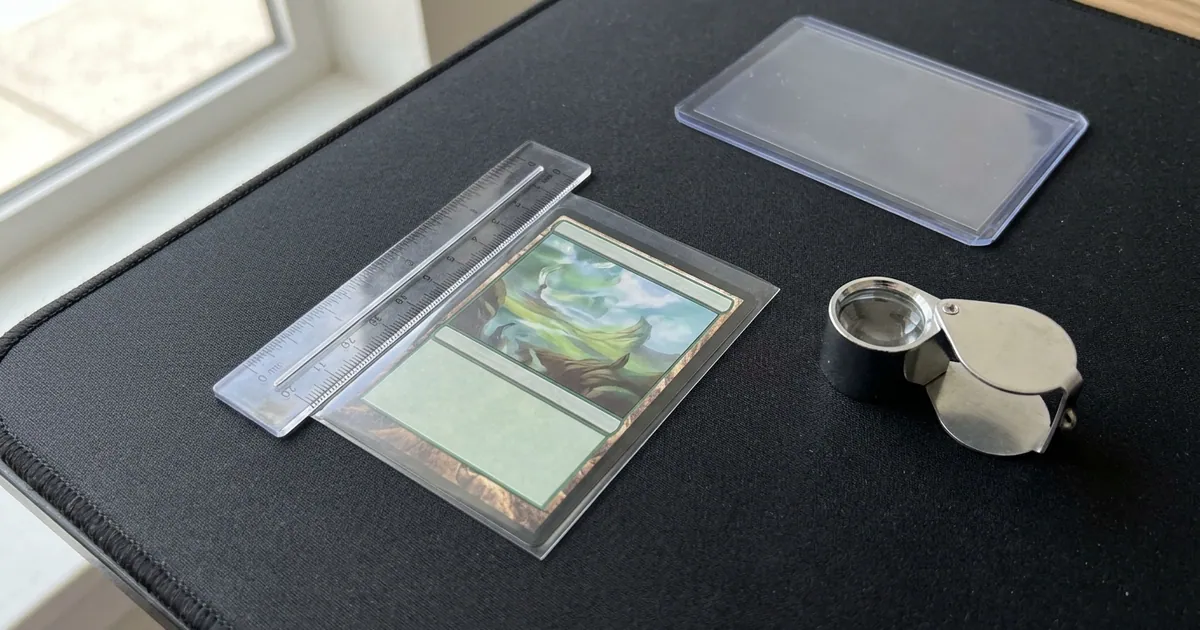
Sometimes, but less often than people hope. An off-center card is worth grading when the best grade its centering allows still sells for clearly more than the raw card plus every grading cost, or when a valuable card needs authentication. For most modern cards, where the real money sits in the 10, a card that is visibly off-center (roughly 65/35 or worse on its worst side) usually isn’t worth the fee.
The rest of this guide shows you how to decide card by card: what graders measure, the published limits, and the math that tells you whether to submit or keep the card raw.
Key takeaways
- Centering sets a grade ceiling. Perfect corners, edges, and surface can’t lift a card above what its centering allows.
- PSA’s published standards put the front centering limit at roughly 55/45 to 60/40 for a PSA 10, about 60/40 to 65/35 for a 9, and about 65/35 to 70/30 for an 8. Always confirm current wording on PSA’s site.
- Price the card at its realistic ceiling grade, not at the 10 you wish it were. If that number minus all fees beats raw value, grading can make sense.
- Off-center cards are most often worth grading when they are vintage, key rookies, high-value cards that need authentication, or cards with deep markets at mid grades.
- Skip grading when the ceiling-grade price barely clears raw value, or when the card also has whitening, soft corners, or surface wear.
What off-center actually means to a grader
Centering compares the border widths on opposite sides of the card. Graders check two axes, left-to-right and top-to-bottom, on both the front and the back. The worst axis is the one that limits the grade.
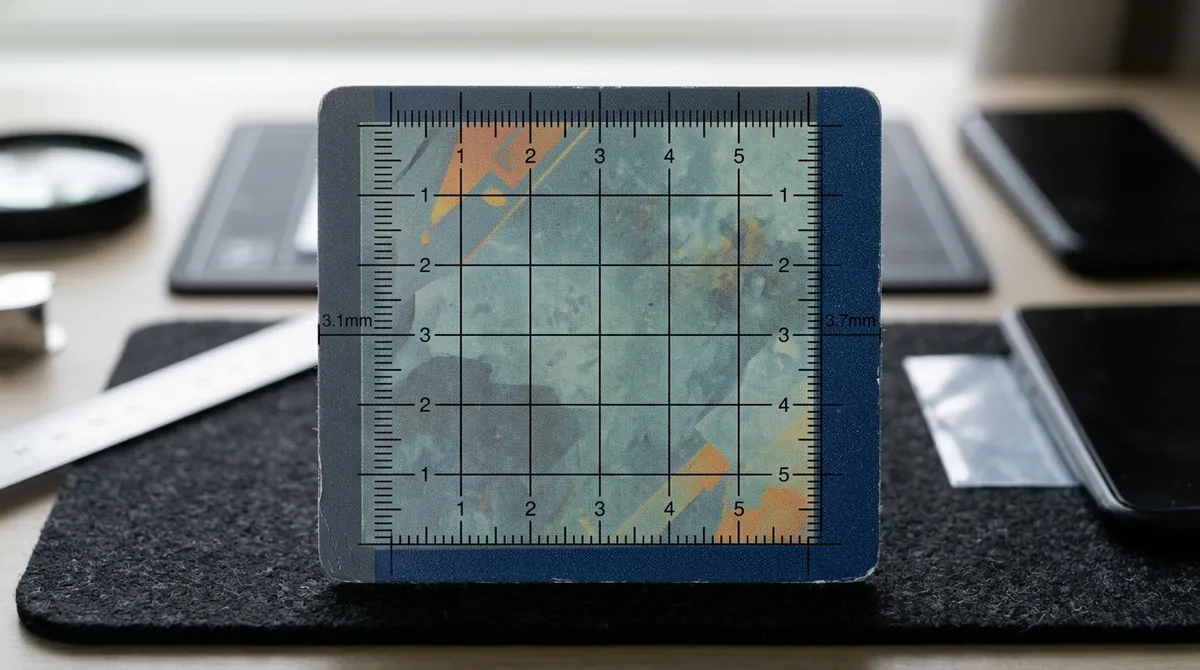
To express centering as a ratio, divide the narrower border by the combined width of both borders. Here is an example:
- Left border: 1.8 mm
- Right border: 2.7 mm
- 1.8 ÷ (1.8 + 2.7) = 0.40, so the card is 60/40 left-to-right.
A few things trip collectors up:
- Tilt (diamond cut). If the printed frame is rotated relative to the card edge, the border is wider at one end of a side than the other. Graders judge how the card looks overall, so a tilted card can grade worse than a single measurement suggests. Measure near both corners of each side.
- Miscuts are different. A card cut so badly that part of the next card shows is usually called a miscut. PSA uses a separate MC qualifier for this. A few miscut errors attract collectors, but most don’t, so don’t assume yours is one of them.
- Borderless and full-art cards. With no plain border to measure, graders judge centering against frame lines, text boxes, or other design elements. Results are less predictable, so be more conservative when you estimate.
Published centering limits and the grade ceiling they create
The table below summarizes front-centering guidance from PSA’s and Beckett’s published grading scales. PSA uses the word “approximately,” and both companies have revised their wording over time. Treat this as a planning tool and check the official standards pages before you submit.
| Worst front axis | PSA (published front guidance) | BGS centering subgrade (front) |
|---|---|---|
| 50/50 | Eligible for 10 | Eligible for 10 Pristine |
| ~55/45 | Eligible for 10 | ~9.5 |
| ~60/40 | Edge of PSA 10 range; solid 9 | ~9 |
| ~65/35 | ~8 to 9 range | ~8.5 |
| ~70/30 | ~7 to 8 range | ~8 |
| ~75/25 | ~7 | Lower; check BGS scale |
| ~80/20 | ~6 | Lower; check BGS scale |
| ~85/15 | ~4 to 5 | Lower; check BGS scale |
| ~90/10 | ~3 | Lower; check BGS scale |
The back has its own limits, which are much looser. PSA’s published guidance allows roughly 75/25 on the back for a 10 and about 90/10 for most grades below that. Beckett grades back centering within its centering subgrade, and its 9.5 standard calls for about 60/40 on the back.
Keep two practical points in mind:
- BGS overall grades aren’t a simple average. Beckett says the lowest subgrade weighs heavily on the final grade. A 7.5 centering subgrade can drag down a card with 9.5 corners.
- CGC and TAG publish their own scales. If you’re considering those companies, read their current centering criteria directly instead of mapping PSA numbers onto them.
If you want the full measuring method, our card centering tool walks through it with photos.
The OC qualifier, and why it matters for resale
PSA can assign a grade with an OC (off-center) qualifier. This happens when the card meets the criteria for a higher grade in every respect except centering. The result is a slab like “PSA 8 OC.”
That matters because buyers usually value qualified slabs well below the same number without a qualifier. Many treat an 8 OC as closer to a much lower plain grade. How big the discount is depends on the card and the market, so:
- Search sold listings for the qualified grade specifically. Don’t price an “8 OC” off regular PSA 8 sales.
- Check PSA’s current submission options for how qualifiers are handled before you send cards in. Policies and form options can change.
If a qualifier would make the slab hard to sell, factor that in now, before you pay the fee.
Checklist: decide on one off-center card in five minutes
Grab the card, a sleeve, and a ruler or centering tool, then work through these steps.
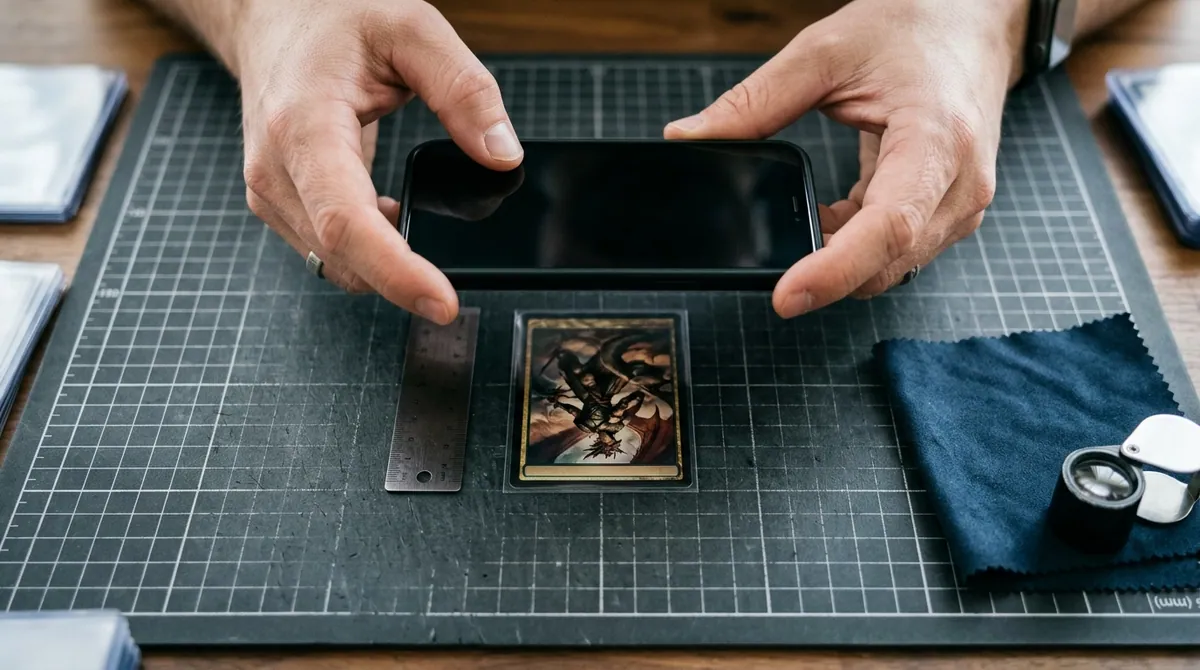
- Set up your light. Use bright, diffused light, such as a window with sheer cover or two lamps angled from the sides. Avoid a single overhead bulb that casts glare across the border.
- Lay the card flat on a dark, non-reflective surface. Keep it in a penny sleeve so you don’t handle the surface.
- Measure the front, left and right. Use a centering ruler or a loupe with a millimeter scale. Write down both border widths.
- Measure the front, top and bottom. Write those down too.
- Check for tilt. Measure the left border near the top corner and again near the bottom corner. If the two numbers differ noticeably, the cut is tilted.
- Repeat on the back. It rarely decides the grade, but a badly off back can still cost you.
- Calculate the worst ratio. Divide the narrow border by the total for each axis. The lowest result is your limiting number.
- Find your ceiling. Map that ratio to the table above. Be honest: if you measured 63/37, plan for an 8, not a 9.
- Inspect everything else. Look at corners and edges under a loupe for whitening. Then tilt the card under a raking light to reveal scratches and print lines. Each extra flaw pushes the realistic grade below the centering ceiling.
- Pull sold comps at the ceiling grade. Use recent completed sales, not asking prices. Check the qualified grade too if an OC is plausible.
- Do the math. Subtract the grading fee, shipping both ways, insurance, and any marketplace selling fees from the expected slab price. Compare the result to what the card sells for raw.
Here is a hypothetical example. A card sells for $40 raw. Its centering caps it around an 8, and 8s sell for $55. If grading, shipping, and selling costs total $30, you’ve turned a $40 card into $25 of net value. Keep it raw.
When an off-center card is worth grading
Off-center doesn’t automatically mean “don’t grade.” These are the situations where it often still pays:
- Vintage and key cards with deep mid-grade markets. Many older print runs were poorly centered. Buyers actively look for PSA 5s, 6s, and 7s of important cards. If a 6 of your card sells well above raw, centering is just one input.
- High-value cards that need authentication. For expensive cards, counterfeit risk makes raw buyers nervous. A slab at a modest grade can sell faster and for more than the raw card, because the authenticity question is settled.
- Cards where any grade carries a premium. Some low-population or sought-after cards sell well in slabs across the whole grade range. Check whether sold prices at 7 and 8 sit clearly above raw.
- Registry or personal collection goals. If you’re completing a graded set or simply want the protection of a slab, the math is different. Just make that choice on purpose, not because you hoped for a 10.
- Borderline 60/40 cards with flawless everything else. A card at the edge of PSA’s published 10 range, with clean corners, edges, and surface, is a reasonable shot. Price it as a likely 9 so a 10 is a bonus rather than the plan.
When to skip grading (or wait)
This is where most off-center cards land:
- Modern cards where only the 10 matters. If PSA 9s sell close to raw, any card that can’t realistically reach a 10 is a fee with no payoff.
- Centering at 70/30 or worse on modern cards. The ceiling is too low for most modern markets to reward.
- Off-center plus other flaws. Whitening, soft corners, or surface scratches stack on top of the centering limit. Expect the final grade to land below the ceiling, not at it.
- Low-value cards you plan to sell. When the fee is a large share of the card’s value, even a good result rarely covers costs.
- Uncertain measurements. If your photo was angled or you couldn’t measure confidently, re-measure before paying for a submission.
If the card is close to the line, keep it raw, store it properly, and revisit the decision when prices or grading fees change. A raw card loses nothing by waiting.
Using Card Grading AI as a first filter
Measuring borders by hand works, but it gets tedious across a stack of cards, and angled photos are easy to misread. Card Grading AI analyzes photos of your card and estimates the centering ratios along with corners, edges, and surface. That lets you sort cards into “submit,” “maybe,” and “keep raw” before you spend money on fees.
To be clear, these results are pre-grade estimates. They are not official grades, appraisals, or guarantees, and they don’t replace PSA, BGS, CGC, or TAG. Use them to screen cards. Then confirm borderline cards by hand and check current standards on the grading company’s site.
You can start with our centering checker, run a full AI pre-grade, and see what’s included on our pricing page. The goal is simple: spend grading fees only on cards where the math works.
FAQ
What centering do you need for a PSA 10?
PSA's published Gem Mint standard calls for approximately 55/45 to 60/40 or better on the front and 75/25 or better on the back. PSA has adjusted this wording over the years, so confirm the current standard on PSA's official grading standards page before you submit.
Is a PSA 8 OC worth less than a regular PSA 8?
Usually, yes. The OC (off-center) qualifier means the card met the criteria for that grade in every way except centering. Many buyers treat qualified slabs as a meaningful step down. Check sold listings for qualified slabs specifically rather than assuming they track the unqualified grade.
Can an off-center card still get a high grade?
Only within the tolerances. A card at roughly 60/40 can still reach a PSA 9, and possibly a 10 at the edge of PSA's published range. Once the worst axis is around 70/30 or worse, the published standards cap the card well below Mint no matter how clean the corners and surface are.
Does centering matter on the back of the card?
Yes, but the tolerance is much looser. PSA's published standards allow about 75/25 on the back for a 10 and about 90/10 for most grades below that. Beckett also grades back centering within its centering subgrade. Back centering rarely decides a grade on its own, but you should still measure it.
Can AI tell me exactly what grade my off-center card will get?
No. Tools like Card Grading AI estimate centering ratios and give a pre-grade from your photos. That helps you decide whether a submission makes sense, but it is not an official grade or a guarantee. Only the grading company assigns the actual grade.
Keep reading
Related guides
Ready to inspect your next card?
Scan your cards instantly with Card Grading AI
Capture a clear front-and-back photo, review an AI-assisted condition estimate, and keep standout cards organized in your collection.